
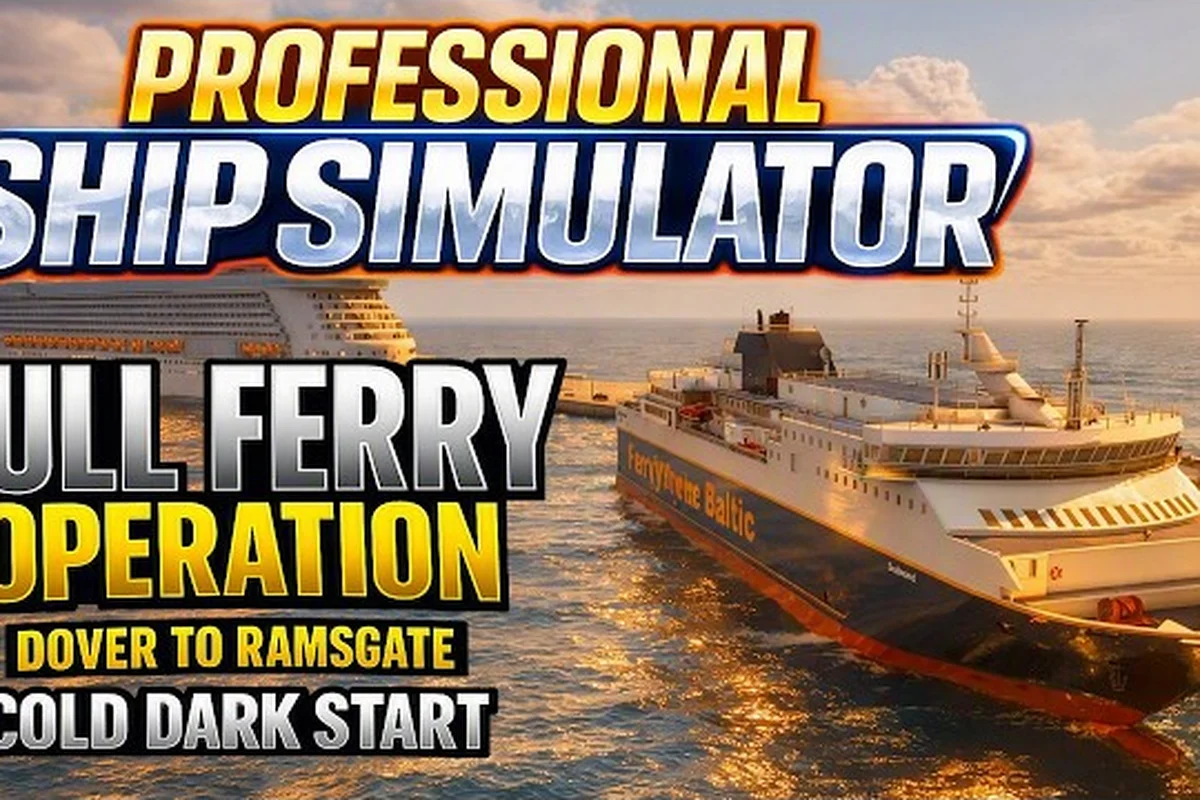
Setting sail into Professional Ship Simulator Ramsgate puts you at the helm of a deeply authentic English Channel port, where the Royal Harbour's Western and Eastern arms frame one of the most recognizable approach corridors in the sim. The release, announced for September 16th, brings licensed harbour geometry, realistic tidal windows, and AIS-driven traffic that mirrors the real working port. The Professional Ship Simulator release announcement confirms Ramsgate as a flagship port on day one, alongside four other German harbours that anchor the Baltic portion of the world map.
This guide breaks down the Ramsgate approach, the inner harbour layout, and the connected harbours at Stralsund, Sassnitz, Greifswald, and Lubmin so you can plan a port-to-port cruise that exercises tugs, pilot ladders, and harbour manoeuvres without burning credits on avoidable mistakes.
Ramsgate as a Southern Channel Home Port
Ramsgate is more than a scenic tile on the map. It is the southernmost English Channel port included in the early-access build, and it acts as a natural bridge between the Channel approaches and the North Sea basin. For players learning ship handling in confined harbour basins, the inner marina offers forgiving geometry, while the outer harbour challenges you with cross-currents and ferry wash. The port also generates high-value contracts tied to offshore supply and fishing runs, so a clean approach directly affects your earning potential.
The sim's tide-aware waterline means a vessel that floats easily at high water may ground near the breakwater at low water. Players who master the tide windows at Ramsgate tend to generalize that knowledge quickly to other professional ship simulator harbours, which is why experienced captains treat Ramsgate as a training ground before attempting the German Baltic harbours.
| Ramsgate at a Glance | Detail |
|---|---|
| Sea basin | English Channel / North Sea entry |
| Harbour type | Royal Harbour with double arms |
| Primary traffic | RoRo ferries, fishing fleet, pleasure craft |
| Challenge tier | Intermediate (tidal range, wash) |
| Recommended starter ship | Tug class (see how to dock guide) |
The approach channel runs roughly 0.6 nautical miles from the breakwater heads to the inner dock gates, with a maintained depth that can drop below the safety margin of deeper-hulled cargo vessels during spring low water. This is why tug work pays so well at Ramsgate: many captains prefer to be towed in rather than risk a grounding that triggers repair costs.
Ramsgate Approach, Breakwater, and Inner Harbour
The approach begins well before the breakwater line. From the Strait of Dover transit corridor, you will pick up Ramsgate's leading lights approximately 1.8 nautical miles out, with the white sector guiding you through a 110-degree safe-bearing window. Veering outside that sector on either side puts you in a red zone that shoals quickly. Players new to Channel navigation should consult a wider area overview, and the Island of Rügen and Dover port list maps out the surrounding harbours for transit planning.
Breakwater Entry and Pilot Pickup
The Western and Eastern breakwaters form a 240-meter-wide entrance, and a working pilot cutter typically cruises just inside the heads, holding station against the cross-current that sets across the approach. At spring tides the usable width narrows further because the ebb runs hardest along the Western Arm, so treat the centre of the channel as the safest line rather than hugging either head. To request a pilot, you must:
-
Reduce speed to under 6 knots before crossing the heads.
-
Sound one short blast on the horn, then raise the G pilot flag on the starboard shrouds.
-
Maintain a heading of roughly 087 degrees to keep the pilot ladder in the lee.
If you are piloting a RoRo ferry or a fishing vessel under 24 meters, the harbourmaster may waive compulsory pilotage, but the AI traffic still expects you to follow the lateral marks along the approach corridor. Ignoring them triggers a harbour violation fine that erodes your daily earnings.
Inner Harbour Layout
Once inside, the Royal Harbour splits into a Western Arm used primarily by fishing trawlers and a larger Eastern Arm serving ferries and visiting yachts. The Eastern Arm is also where the commercial berths are, with finger pontoons running north-south and a single linear quay for larger freight. A small craft lock at the southeastern corner connects to the marina basin, which is gated and only opens on the hour during daylight operations.
| Inner Harbour Zone | Best Use | Draft Limit (approx.) |
|---|---|---|
| Western Arm | Fishing, small tugs | 3.5 m |
| Eastern Arm (pontoons) | Yachts, pilot boats | 4.0 m |
| Eastern Arm (quay) | RoRo, small cargo | 5.5 m |
| Marina lock | Pleasure craft only | 2.2 m |
A useful habit is to switch to harbour view camera while threading the entrance, because the bridge wing view often clips the breakwater heads. Players who want a faster onboarding path can review the Professional Ship Simulator beginner guide for camera and UI basics before running a real approach.
Harbours in the Professional Ship Simulator Baltic Set
The same early-access build ships with a tightly clustered group of German Baltic harbours, all of which share a coastline profile, water density, and tidal behaviour. Together with Ramsgate, they form the five-port launch roster. If you want a comprehensive sense of how they differ, the Rügen and Baltic port overview gives a wider view of the entire basin.
Professional Ship Simulator Stralsund
Stralsund sits at the southwestern edge of the Rügen strait, and it is a working harbour for ferries crossing to Hiddensee and to Danish Bornholm. The approach is narrow, with a staggered channel that forces a slight S-bend before you reach the lock. Strong currents run through the strait, so under-keel clearance is the recurring concern.
Professional Ship Simulator Sassnitz
Sassnitz, on Rügen's northeastern coast, is built around a deep-water pier that historically served ferries to Trelleborg and Klaipeda. In the sim, the pier has been re-modelled for offshore wind service vessels, and a wind farm supply contract at Sassnitz is one of the higher-paying starter jobs.
Professional Ship Simulator Greifswald
Greifswald operates as a smaller, river-fed harbour on the Ryck. The narrow entrance makes Greifswald ideal for practicing single-screw manoeuvring, and the river bends reward captains who use bow thrusters early. Many players use Greifswald as a stepping stone before tackling the more exposed ports.
Professional Ship Simulator Lubmin
Lubmin is a low-key industrial harbour best known for an LNG terminal and a research pier. The water is calm, but the approach passes through a designated marine protection zone, where speed is restricted to 8 knots and a strict no-wake rule applies. Breaking it triggers a heavy fine and contract penalties.
| Harbour Comparison | Type | Approach Difficulty | Notable Contract |
|---|---|---|---|
| Stralsund | Ferry and lock | High (current) | Hiddensee shuttle |
| Sassnitz | Deep-water pier | Medium | Wind farm supply |
| Greifswald | River port | Medium (bend) | Inland cargo |
| Lubmin | Industrial/LNG | Low–Medium (speed zone) | LNG escort |
Planning a Ramsgate-to-Baltic Cruise
A point-to-point cruise from Ramsgate through the Strait of Dover, down the North Sea, around Denmark, and into the Baltic is a multi-day project in Professional Ship Simulator. Fuel planning, crew rest, and weather routing all become real constraints. The in-game weather system propagates swell from the North Atlantic into the Channel, and crossing during a Force 7 will push your ETA out by 6–8 hours.
Fuel and Crew Stops
The most efficient route usually breaks into four legs, chosen so you reach the next bunkering port with at least a quarter tank in reserve rather than running the gauge down toward the warning band. Weather routing matters as much as raw distance: a North Sea swell running against the ebb can add hours to a leg that looks short on the chart, so plan each departure around the tidal windows rather than the straight-line mileage.
-
Ramsgate to Ijmuiden (about 95 nm) for the first bunkering.
-
Ijmuiden to Esbjerg (around 380 nm) crossing the central North Sea.
-
Esbjerg to Gedser (about 150 nm) running through the Danish straits.
-
Gedser to Sassnitz (roughly 90 nm) and then the short hop to Stralsund, Greifswald, or Lubmin.
Fuel burn scales with displacement and RPM, so a heavily laden supply vessel will need a mid-route refuel. Most captains carry a spare fuel drum in the deck store for emergencies, and you can also use the Professional Ship Simulator starter guide for refuelling protocol at each harbour.
Weather and Timing
Crossing the Dover Traffic Separation Scheme (TSS) requires you to flow with traffic, which is enforced in the sim by AIS penalties for crossing against the lane. Plan your Ramsgate departure to arrive at the TSS crossing at slack water, and you will find the cross-current push is dramatically reduced. Once in the Baltic, the smaller fetch means gentler swell, but fog banks roll in quickly near Sassnitz and Greifswald in the early morning hours.
| Leg | Approx. Distance | Best Departure Window | Common Hazard |
|---|---|---|---|
| Ramsgate → Ijmuiden | 95 nm | 2 hours before HW | TSS crossing |
| Ijmuiden → Esbjerg | 380 nm | Late evening | North Sea swell |
| Esbjerg → Gedser | 150 nm | Dawn | Danish strait current |
| Gedser → Sassnitz | 90 nm | Mid-morning | Coastal fog |
| Sassnitz → Stralsund | 35 nm | Anytime | Staggered channel |
Practical Docking and Harbour Etiquette
Docking at any of these professional ship simulator harbours follows a similar rhythm — reduce to bare steerage, set the spring line before sternway dies, and let the tug take the weight — but each port carries small quirks worth learning before you commit a heavy hull to it. The section below separates the habits that transfer between basins from the local rules you simply have to memorise, and players who want a thorough method should study the docking tutorial alongside it.
At Ramsgate, the Eastern Arm quay is straight-to, but you will find that strong westerlies push the bow off the berth during the final approach. The trick is to use a spring line early, before you lose stern momentum, and let the harbour tug take up the slack. At Stralsund, the lock schedule is fixed: miss the hourly opening by even a few minutes and you will wait a full cycle. At Lubmin, the 8-knot speed zone is enforced by harbour patrol vessels, and going over will cost a daily credit bonus.
Common Mistakes at the Five Launch Harbours
-
Approaching with too much sternway and bumping the quay at Ramsgate's Eastern Arm.
-
Misjudging the staggered channel at Stralsund and grounding on the eastern bank.
-
Failing to deploy bow thrusters in time at Greifswald's river bend.
-
Speeding through Lubmin's marine protection zone and losing the contract bonus.
-
Anchoring in the wrong sector at Sassnitz and obstructing the wind farm service lane.
A useful countermeasure is to set waypoints for each phase of the approach: one at the heads, one at the harbour office, and one at the berth. This breaks the manoeuvre into manageable segments and helps when the harbourmaster radio interrupts with traffic updates.
| Mistake | Where | Quick Fix |
|---|---|---|
| Quay strike | Ramsgate Eastern Arm | Deploy spring early, use tug |
| Grounding | Stralsund channel | Track leading lights, slow to 3 kn |
| Missed timing | Stralsund lock | Watch the lock schedule board |
| Over-speed | Lubmin zone | Cap at 8 kn until exit buoy |
| Wrong anchor | Sassnitz | Use the designated sector on chart |
Frequently Asked Questions
What is the best starter ship for Ramsgate approaches?
A tug class hull is the most forgiving option for Ramsgate because it has high manoeuvrability, a shallow draft, and a strong bow thruster. New captains can learn the breakwater geometry without risking a costly grounding, and tugs are also in demand for assisting larger ferries into the Eastern Arm.
Do tides affect all five professional ship simulator harbours equally?
No. Ramsgate has a tidal range of roughly 4–5 meters, which directly affects under-keel clearance at the breakwater. The Baltic harbours, including Stralsund, Sassnitz, Greifswald, and Lubmin, see much smaller water-level changes, but wind-driven surge can still push draft margins close to the safety threshold. Always check the harbour's tide and weather panel before committing to a berth.
Can I run contracts between the English Channel and the Baltic harbours?
Yes, and it is one of the more rewarding loops in the early-access build. You can take a Ramsgate departure, transit through the Strait of Dover, and pick up a wind farm supply contract at Sassnitz or a ferry shuttle at Stralsund. The longest leg, Ijmuiden to Esbjerg, is around 380 nautical miles, so plan fuel and crew rest before departure.
Is the Lubmin speed zone strictly enforced?
Community testing reports that the 8-knot no-wake rule at Lubmin is enforced by both harbour patrol vessels and a docked sensor system. Speeding through the marine protection zone typically triggers a credit fine and removes the contract bonus, so it is cheaper to simply respect the limit from the moment you enter the marked channel.
Where can I see a full list of professional ship simulator harbours?
The most up-to-date roster is on the Rügen and Dover port list, which covers the English Channel, North Sea, and Baltic basins. Combined with this guide, that overview gives you the full picture of the five launch harbours and their connected transit corridors.