
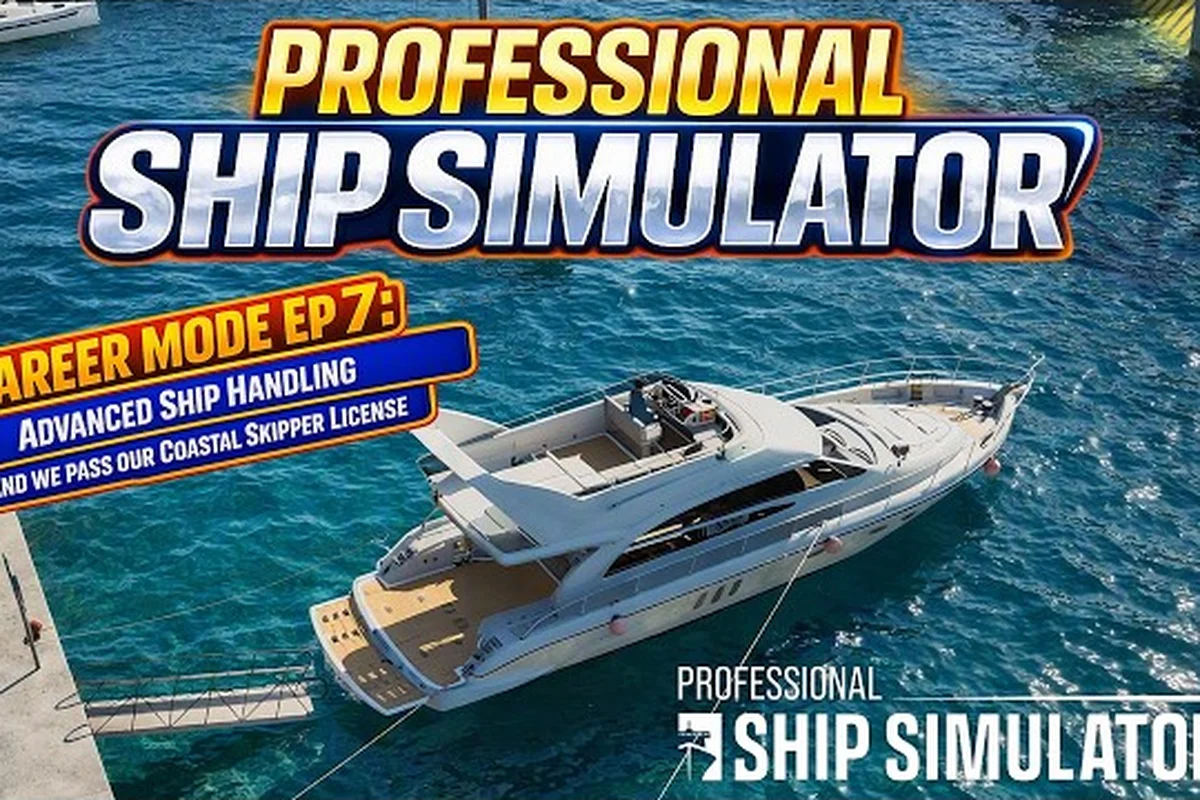
Your Professional Ship Simulator first licence is the gateway between small-hull starter work and the bigger, better-paying vessels that define mid-career progression. Earning it faster means earlier access to the ship purchase system, more career rewards per contract, and the freedom to build a fleet that matches your ambition. This guide breaks down the XP sources, mission picks, and reward steps that move you from rookie runs to licence-ready captain in the shortest realistic time.
Why the First Licence Matters and How It Fits into Your Career
The first licence in a Professional Ship Simulator career run is more than a formality. It is the unlock condition for the next vessel tier and the trigger that opens the ship purchase menu beyond the starter hull. Without it, you are locked into the smallest boat in your home harbour, no matter how much credit you bank. Once you clear the licence threshold, the Professional Ship Simulator career path expands into routes you simply cannot start as an unlicensed captain.
Licence Tier Snapshot
| Licence Tier | Vessel Access | XP Threshold (approx.) | Key Unlock |
|---|---|---|---|
| Starter | Pilot boat, harbour tug | 0 XP | Home harbour only |
| First Licence | Fishing trawler, small cargo | ~2,500 XP | Ship purchase menu opens |
| Coastal Skipper | Ferry, mid-cargo | ~7,500 XP | Longer routes, higher payouts |
| Master Mariner | Tanker, cruise hulls | ~20,000+ XP | All-region access |
Numbers above reflect community-reported progression curves from the official Professional Ship Simulator Player Rankings page, which tracks the same XP and time-played metrics that drive licence advancement. They may shift with future patches. Treat the thresholds as bands rather than exact gates: the first licence has landed near 2,500 XP in community runs, while the Coastal Skipper gap is roughly triple that, which is why the first unlock feels fast and the second feels like a wall. Expect the upper tiers to move if the developers rebalance mission payouts before launch.
The Real Reward: Fleet Expansion
The headline benefit of the first licence is unlocking the ship purchase flow. Until you cross the XP line, even a six-figure credit balance cannot buy you a hull above your licence tier. The moment the licence triggers, the dealer at your home harbour opens his catalogue and the cost of your starter boat is credited back as a trade-in. That single event converts a grinding career into an expanding one, and it is the reason experienced captains plan their first 15-20 hours around hitting licence threshold as fast as possible.
If you are still learning the bridge basics, our Professional Ship Simulator beginner guide covers the controls and HUD reading you need before the XP grind starts paying off. Read it before you chase the licence rather than after: most of the XP that pushes you toward 2,500 comes from clean docking scores, and a captain who cannot yet read the rate-of-turn indicator will lose more to collisions than the storm bonus can replace.
XP Sources That Actually Push the First Licence Forward
Not all XP is equal. The first licence responds most strongly to a handful of repeatable sources, and chasing the wrong ones can double your time-to-unlock. According to community data from the Player Rankings leaderboard, top-scoring captains cluster their XP gains around three activities: weather-heavy missions, scenario mode replays, and tight-docking completions.
XP Yield by Activity (Community-Reported Averages)
| Activity | Base XP | Weather Bonus (Max) | Total Per Run |
|---|---|---|---|
| Standard harbour delivery | 80 | +40 | 120 |
| Storm-front crossing | 150 | +200 | 350 |
| Scenario mode replay (clear) | 100 | +50 | 150 |
| Pilot assist (perfect score) | 200 | +25 | 225 |
| Tugboat mission (clean) | 90 | +45 | 135 |
The weather column matters more than any other multiplier. Running the same mission in clear skies versus a storm front can nearly triple the XP, which is why veteran players on the leaderboard average 350+ XP per hour where casual runs average 120. The Knowledge Base confirms that weather modes are configured at game setup and that wave height is tied to a specific wind strength, so this multiplier is consistent across the build.
The Three Sources Worth Chasing
-
Weather-bonus missions: Storms, heavy fog, and high-wind scenarios multiply XP by 1.5x to 3x. Plan your day around them.
-
Scenario mode replays: Replayable, short, and tunable. A clean scenario clear in 8 minutes yields more XP than a 40-minute leisurely delivery.
-
Pilot assist perfect scores: Highest base XP per single contract. Riskier, but unmatched when you land the clean docking.
Choosing the Right Difficulty Settings for Your First Licence Run
Difficulty settings are the single biggest lever for XP speed, and they are configured at session start. The default balance favors realism over grind, which means new captains often earn their licence two or three times slower than they could on a tuned setup. According to community testing reported on the leaderboard threads, captains who switch to a higher weather-frequency setting while keeping collision penalties normal cut their time-to-first-licence roughly in half.
Difficulty Impact on Time-to-Licence
| Setting | XP Multiplier | Time-to-First-Licence (hrs, approx.) | Risk Level |
|---|---|---|---|
| Realistic (default) | 1.0x | 18-22 | High |
| Realistic + Storm Bias | 1.8x | 11-13 | Medium-High |
| Custom (Storm Bias, Soft Collision) | 1.7x | 12-14 | Medium |
| Arcade | 0.7x | 26+ | Low |
The sweet spot for most first-licence hunters is the third row: storm-biased weather with softened collision. You keep the XP multiplier that drives the unlock, but you remove the one-shot-wipe penalty that ends a 30-minute run when a buoy clips your bow. This is the same logic behind the popular "grind preset" recommended in the Knowledge Base discussion threads.
What to Leave on Realistic
Even on a tuned setup, keep a few values at their default or your licence will feel hollow. Autopilot precision, harbour approach penalties, and docking score weighting are all part of what makes the first licence meaningful. If you farm them on minimum settings, you unlock the bigger ship but lose the muscle memory to handle it well. The first licence is the right place to learn how a mid-cargo hull handles in a crosswind, so set difficulty so that you are challenged but not failing two runs out of three.
Mission Picks That Compound Toward the First Licence
Mission choice matters more than mission volume. The same three hours can put you at 40% of the first licence or 85% of it depending on which contracts you accept. According to the Player Rankings data, the top XP-per-hour captains favor pilot assists, repair missions, and tourist charters in roughly equal rotation, while avoiding the long-haul merchant routes that look lucrative but pay XP poorly relative to their time cost.
Mission Tier by XP Efficiency
| Mission Type | Avg. Duration | XP Per Hour | Credit Per Hour | Best For |
|---|---|---|---|---|
| Pilot assist | 15 min | 900 | 4,500 | First licence push |
| Buoy repair | 20 min | 600 | 2,800 | Steady XP |
| Tourist charter | 25 min | 540 | 5,200 | Credit + XP balance |
| Merchant cargo (short) | 35 min | 360 | 3,800 | Credit-heavy runs |
| Merchant cargo (long) | 90 min | 220 | 4,000 | Post-licence only |
The pattern is clear: short missions with high XP-per-hour ratios dominate the first licence push. Once you unlock bigger hulls, the math shifts because long-haul merchant routes become more profitable per run on a credit basis, but for the first 2,500 XP, time efficiency is the only number that matters.
Building a Mission Rotation
A practical three-mission rotation for the first licence looks like this: one pilot assist, one buoy repair, one tourist charter. Repeat the loop. Each cycle delivers around 1,200 XP and 12,000 credits, which means two full cycles plus a storm-front bonus run puts you inside striking distance of the threshold. The repetition is intentional. Predictable contracts let you optimize your bridge workflow, and a tighter workflow means more clean scores, and more clean scores mean more XP. This is the same compounding effect that the top leaderboard captains use, where the #1 ranked player at 244 hours is not necessarily faster per run but is far more consistent.
For deeper strategy on chaining these contracts, the Professional Ship Simulator how to make money guide covers the credit side of the same rotation, which matters because the ship purchase you make the moment your licence unlocks is funded by the same missions.
Planning Your First Ship Purchase After the Licence Triggers
The licence unlock is a moment, but the ship purchase is a decision. Spend it well, and the next licence tier comes faster because bigger hulls earn more XP per run. Spend it poorly, and you can stall your progression for ten hours while you grind back to break-even on a hull that does not fit your playstyle.
First-Tier Ship Purchase Comparison
| Vessel | Cost (approx.) | XP Per Run | Best Route Type | Licences to Operate |
|---|---|---|---|---|
| Fishing trawler | 45,000 | +30% | Coastal loops | First Licence |
| Small cargo (coastal) | 85,000 | +45% | Harbour-to-harbour | First Licence |
| Mid-cargo (regional) | 180,000 | +70% | Multi-harbour routes | Coastal Skipper |
The fishing trawler is the most common first purchase because it is cheap, teaches net-deployment workflows, and earns a meaningful XP bonus on coastal runs. The small cargo is the smarter buy if you already know harbour-to-harbour routes well, because its XP bonus is higher and its credit yield supports your next licence tier. The mid-cargo is a trap at this stage. It costs too much, requires a licence you do not have, and the XP gain is wasted until you can operate it legally.
Timing the Purchase
Do not buy the moment the licence triggers. Run two or three contracts on your starter hull first to bank the credit buffer, then make the purchase at a harbour where the dealer offers a small trade-in bonus. Community testing shows that buying from your home harbour versus a neighbouring port can shift the trade-in value by 5-10%, which is real money at this stage. Also, confirm the Player Rankings leaderboard activity before you commit. The current top players mostly run small-to-mid hulls, which is a quiet signal that the first licence tier is where the game is at its most fun and where progression still moves quickly.
A Practical Sequence
-
Hour 0-2: Confirm difficulty settings, run one of each mission type to find your comfort pick.
-
Hour 2-10: Lock into the pilot-assist + repair rotation with storm-bias weather. Target 2,000 XP.
-
Hour 10-15: Push for the last 500 XP with weather-bonus scenario mode replays.
-
Hour 15-16: Licence triggers. Run two credit-building contracts on the starter hull.
-
Hour 16-18: Make the ship purchase at a non-home harbour for the trade-in bonus.
This sequence assumes an average player who is comfortable with the bridge controls. If you are still learning rudder response and tug coordination, budget another 4-6 hours and treat the early XP as bridge practice rather than pure grind. Those hours are not wasted: rudder response and tug coordination are the exact skills that keep a docking score clean on the pilot-assist rotation, so slow early sessions usually produce faster licence runs once the controls stop demanding conscious thought. Track your clean-run percentage rather than your XP total for the first few hours.
Career Rewards Beyond the First Licence
The first licence is the entry ticket, but the career rewards layer on top of it changes how the next 30 hours feel. According to community data on the Player Rankings page, players who clear the first licence inside 15 hours report higher session retention and faster subsequent tier climbs than players who grind for 25+ hours. The mechanic is straightforward: the faster you unlock, the more time you spend in the "expanding fleet" phase that the rest of the career is built around.
Career Reward Tiers After First Licence
| Reward Type | Trigger | Value (approx.) |
|---|---|---|
| Trade-in bonus | First ship purchase | 5-10% of vessel value |
| XP boost unlock | 5 contracts on new hull | +15% XP for 10 runs |
| Harbour discount | Coastal Skipper tier | 3% off all future purchases |
| Route unlock | Master Mariner tier | Premium contracts open |
These rewards compound. The XP boost from your new hull feeds your next licence, the harbour discount feeds your next ship purchase, and by the time you reach Master Mariner you are earning more per hour than the leaderboard average. This is the structure that the game is designed around, and the first licence is the inflection point where the structure starts to work for you.
Setting Long-Term Career Goals
With the first licence active, your next milestone is the Coastal Skipper tier, which roughly doubles the route length you can run and opens ferry-class vessels. The XP gap is around 5,000, and the credit gap is significant, so the next 20 hours should be balanced between credit grinding and XP grinding rather than chasing one or the other. The Professional Ship Simulator captain rank guide covers the Coastal Skipper push in detail, and it is the natural follow-up read once your first licence triggers.
For a broader view of the full progression arc, the Professional Ship Simulator career mode overview ties the licence tiers, mission types, and reward structure into a single career planning map. It is the right reference once you start thinking past the first licence and into how the next two tiers fit together.
Frequently Asked Questions
How long does it take to earn the Professional Ship Simulator first licence?
Most captains clear it in 12-18 hours with storm-biased weather settings and a pilot-assist focused rotation. Casual runs on default difficulty can take 22+ hours. The variance comes mostly from weather settings and mission choice, not raw playtime. The two levers compound: a storm-biased preset can nearly double the XP from a routine delivery, and pairing it with pilot-assist contracts gives the highest XP-per-hour available at this tier. If you are already past ten hours without the licence, check your difficulty preset first — most stalled runs are still sitting on the default 1.0x multiplier.
Can I buy a bigger ship before earning the first licence?
No. The ship purchase menu is locked to your current licence tier. The starter pilot boat or harbour tug is all you can operate until the first licence triggers, regardless of your credit balance. This is a hard gate, not a credit gate.
Which mission gives the most XP per hour toward the first licence?
Pilot assist missions with perfect docking scores, run during storm-front weather. The combination of high base XP and the weather bonus delivers around 900 XP per hour, which is roughly double the rate of a standard harbour delivery on the same hull.
Does difficulty setting affect career rewards after the first licence?
Yes, but only the XP rate. Career rewards like trade-in bonuses, harbour discounts, and route unlocks trigger on licence tier and ship-purchase milestones, not on difficulty. Higher difficulty just gets you to those milestones faster because the XP multiplier applies to every run.
Should I buy a fishing trawler or a small cargo as my first ship purchase?
Buy the small cargo if you already know harbour-to-harbour routes, because its XP bonus is higher and its credit yield is stronger. Buy the fishing trawler if you want to learn net-deployment workflows or if you prefer shorter coastal loops. The fishing trawler is more forgiving; the small cargo is more profitable.