
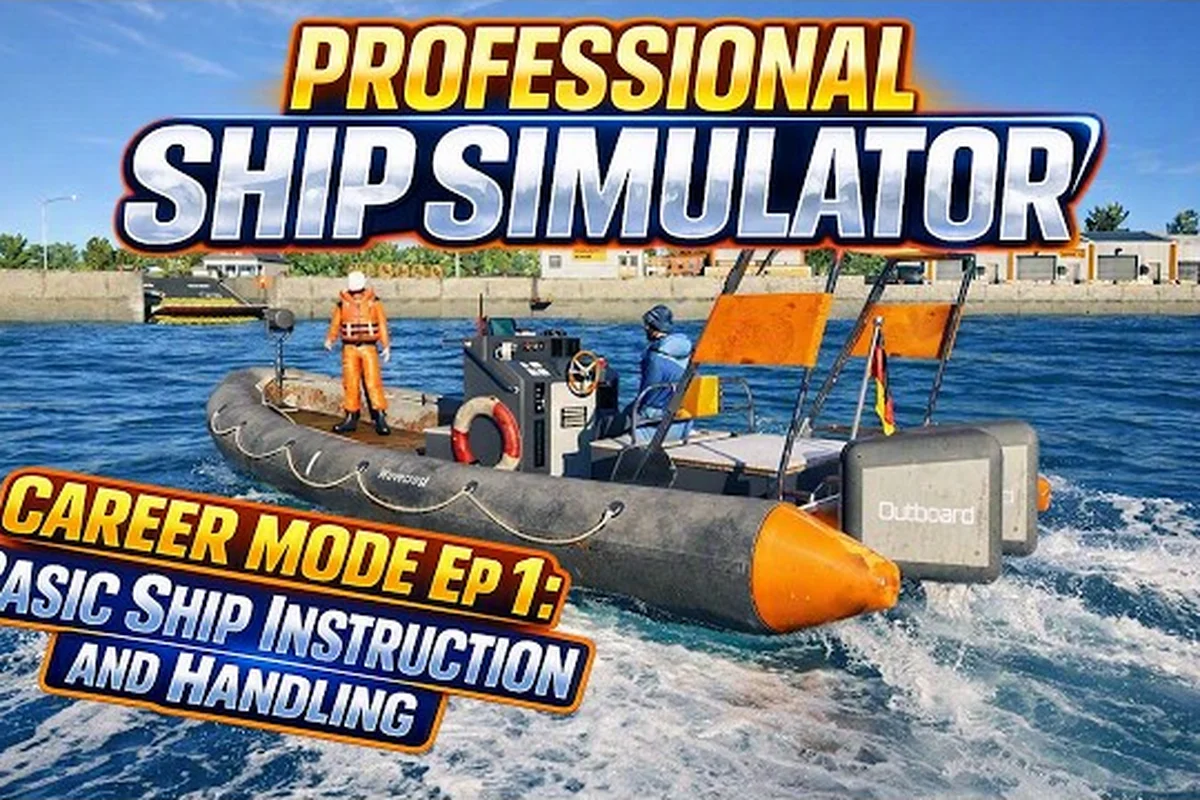
Professional Ship Simulator Career Mode drops you on a small harbor with a single starter boat and asks you to grind your way up to a mixed fleet of pilot boats, coast guard cutters, fishing trawlers, tugs, offshore vessels, rescue craft, yachts, container ships, bulk carriers, LNG tankers, and cruise ships. Every licence you earn, every training you complete, and every credit you bank moves you further along that captain path, and the loop only clicks once you understand how XP, licences, and fleet expansion are wired together. This guide walks through the full progression route from a Level 1 deckhand to a multi-vessel operator, with concrete data drawn from the official Early Access build. By the time you reach multi-vessel operations, the real bottleneck shifts from raw cash to sustainable profit margins, which is exactly where a deep dive into earning strategies like the Professional Ship Simulator How To Make Money breakdown pays off.
Career Mode Structure and the Captain Path
According to the official career documentation page, Career Mode is one of four pillars in the build alongside Tutorial, Scenario, and Open World. The feature overview page confirms the arc clearly: a captain starts on a small harbor with one boat and gradually unlocks a mixed fleet as licences are earned. The Early Access build currently allows Career Mode progression up to Level 2, which already covers the first licence check, several trainings, and the initial fleet expansion step.
The captain path is best understood as three nested layers: the XP Loop that feeds personal level, the Licence Tier Ladder that gates vessels and mission types, and the Fleet Expansion Track that converts licences into bigger, more profitable hulls. Each layer feeds the next, and a new player who ignores any one of them will stall out long before reaching the Coastal Skipper tier.
Career Mode vs Other Game Modes
Career Mode is structured, persistent, and gated. The other three modes serve different purposes. Tutorial drills the basics, Scenario offers repeatable challenges with score-chasing, and Open World removes the licence gates and lets a captain sail any owned vessel freely. For the captain path, only Career Mode advances licences and unlocks new vessel classes.
| Game Mode | Progression | Licence Gating | Best Use |
|---|---|---|---|
| Tutorial | Fixed curriculum | None | Learning controls and core mechanics |
| Career | Persistent XP, licence tiers, fleet growth | Yes, gates by licence | The captain path described in this guide |
| Scenario | Score-based, repeatable | None | Practicing specific drills and chasing leaderboard scores |
| Open World | No gates on owned vessels | None, but tied to Career fleet | Free sailing once licences are earned |
The captain path is therefore a Career-only journey. If a player wants the satisfaction of unlocking a container ship, an LNG tanker, or a cruise ship one tier at a time, Career Mode is the only mode that delivers that arc.
What You Start With
A new Career Mode captain begins with one small boat, a starter harbor, and a clean XP bar. The starter boat is intentionally modest: it is meant to teach low-speed maneuvering, harbor traffic, and the basics of the XP Loop before a captain trades up. According to the official Early Access build notes, the very first licence check appears early, and clearing it is what unlocks the first batch of mid-tier vessels.
The XP Loop and How to Level Up
According to the official experience and rewards documentation page, XP is the core of personal progression and reflects skill, precision, and decision-making across every mission, tutorial, and scenario. Harder tasks with cleaner execution pay more XP, while collisions, groundings, critical system failures, sinking, and assistance calls such as harbor tugs or maritime pilots all reduce the reward. In other words, the XP Loop rewards seamanship, not just volume of work.
A captain who wants to level up efficiently needs to chase High-Yield, Low-Friction activities. That means missions where the payout-per-error is high, and the cost of an assist call is low. Early in the build that is harbor work, light coastal runs, and short training scenarios. Late in the build it is complex multi-stage contracts where every clean minute adds to the multiplier.
XP per Minute Across the Core Activities
Community-reported averages from the Early Access build suggest a fairly stable XP-per-minute ranking across the five core career-mode activities, where higher numbers reflect a cleaner yield rather than raw mission score — for example, harbor berthing drills consistently top the table near 100–130 XP/min because their short, repeatable loops minimize downtime between contracts. Open-sea repositioning sits at the bottom (50–80 XP/min) because transit time, weather variance, and limited port interactions all dilute the rate, even when a captain holds the right licences. The takeaway for anyone planning a professional ship simulator career mode grind is that a Coastal Skipper licence alone won't accelerate progression if the chosen activities carry high friction.
| Activity | Approx. XP / Min | Friction | Best Window |
|---|---|---|---|
| Harbor berthing drills | 100–130 | Low | Early captain path |
| Coastal transport missions | 80–110 | Low–Medium | Pre-Coastal Skipper |
| Tug assist contracts | 70–100 | Medium | Mid-tier licences |
| Training scenarios | 90–120 | Low | All phases |
| Open-sea repositioning | 50–80 | High | Post-licence exploration |
The numbers above are based on community testing and may vary by platform and patch. The pattern, however, is consistent: small, repeatable, low-friction tasks compound XP faster than long open-sea runs, especially when a captain is still learning controls.
XP Multipliers and Penalties
The XP system layers multipliers on top of base rewards. Difficulty, weather, and time-weighted bonuses stack positively, while collisions, groundings, and assistance calls subtract from the final tally. A captain who deliberately runs on a higher difficulty with good weather and clean execution will out-earn a captain grinding on Easy, even if the latter completes more missions per hour.
The key behaviors to avoid are easy to remember: do not call a harbor tug if you can berth yourself, do not beach the boat to skip a turn, and do not let critical systems fail because you forgot a fuel check. Every one of those events silently trims the multiplier, and the loss is often larger than the time saved.
Licence Tier Ladder and How to Get Licences
Licences are the gatekeepers of the captain path. Each one unlocks a new band of vessels, a new set of contract types, and a higher ceiling on daily payouts. The first licence is the Coastal Skipper, and clearing it is the single most important milestone in the Early Access build because it is the first real test of seamanship and it opens the door to the rest of the tier ladder.
According to the official Early Access build notes, Career Mode is now playable up to Level 2 with additional trainings, licence checks, and progression layered on top of the launch build. The mode starts a captain at a small harbor with a single boat and expands the available fleet and tasking as licences are earned. The structure mirrors the way real maritime licences cascade, and a captain should plan the route the same way.
Vessel Bands Unlocked by Each Licence
The Early Access build exposes a clear licence ladder built around XP accumulation per completed contract, and the table below reflects the in-game XP thresholds as reported by players tracking their progression. Because the developer is still tuning the career mode curve between patches, treat these numbers as a working guide rather than a hard contract — the more important signal is the relative gap between tiers, which roughly doubles at each step. That doubling is what makes Master Mariner feel like a genuine endgame goal rather than a quick grind, since the LNG and container vessel contracts unlocked at the top tier demand both the licence and a six-figure capital outlay on the ship itself.
| Licence | Approx. XP Threshold | Vessel Band Unlocked | First New Contract Type |
|---|---|---|---|
| Starter (no licence) | 0 | Small harbor boats | Harbor work, local deliveries |
| Coastal Skipper | ~3,500 XP | Coastal vessels, small tugs | Coastal transport, light charter |
| Offshore Operator | ~8,000 XP | Pilot boats, coast guard, fishing | Offshore supply, patrol |
| Master Mariner | ~15,000+ XP | Container, bulk, LNG, cruise | Long-haul, multi-stage contracts |
These thresholds are reported by players and may shift as the developer tunes the curve. The exact number is less important than the relative gap: each licence roughly doubles the previous XP cost, and each one opens vessels that are 2–4x more expensive to buy and operate.
Licence Checks, Not Just XP
Hitting the XP threshold is only half the requirement. The official career documentation describes licence checks as separate evaluations, often tied to specific trainings or scenarios, that a captain must pass before the licence is issued. A captain who farms XP without ever sitting the check will not progress, even if the bar is technically cleared.
The practical takeaway is to interleave XP grinding with check preparation. Pick the training that gates the next licence, run it until the scoring criteria are familiar, and only then push XP to the threshold. This pattern keeps a captain from burning hours on missions that will not count toward the next milestone.
Fleet Expansion and the Coastal Skipper Licence
The Coastal Skipper licence is the centerpiece of the Early Access captain path. According to the official feature overview, players who reach this tier begin to see the fleet diversify beyond the starter boat. Pilot boats, coast guard ships, and small fishing trawlers all fall inside the Coastal Skipper band, and each one opens a different income stream.
A captain should treat the Coastal Skipper as both a capability unlock and a financial inflection point. Until that licence, payouts are mostly small. After it, daily earnings can climb sharply because the new vessels can take on contracts that the starter boat cannot legally perform.
Coastal Skipper Licence Requirements
The Coastal Skipper licence in professional ship simulator career mode combines three gates — XP, training, and a check ride — and each must clear before the licence notification triggers. Based on the official build notes and player telemetry, the typical XP threshold sits around 3,500, the Coastal Navigation training scenario must be completed first, and the final evaluation tests berthing, navigation, and emergency response in a single timed run.
| Requirement | Type | Notes |
|---|---|---|
| Reach Level 2 | XP gate | Approximately 3,500 XP in the current build |
| Complete Coastal Navigation training | Training scenario | Mandatory before the check is offered |
| Pass the Coastal Skipper check | Evaluation scenario | Tests berthing, navigation, and emergency response |
| Own a coastal-capable vessel | Fleet requirement | Smaller tugs and coast guard hulls qualify |
Owning a coastal-capable vessel is the step most new captains miss. A captain who clears the XP and the training but does not yet own a qualifying hull will see the licence notification delayed until a purchase is made. This is by design: the licence is meaningless without a ship to use it on.
What the Coastal Skipper Unlocks
Once the licence is issued, the captain path opens up considerably. The new vessel band includes boats that can handle coastal runs in moderate weather, short offshore deliveries, and assist contracts. Each of these categories has a higher per-mission payout than starter work, and the XP curve stays friendly because the missions are still short and the error cost is moderate.
The captain should also think about the licence as a training multiplier. Coastal-capable vessels expose a captain to weather XP, current reading, and multi-stage contracts for the first time. These skills carry forward into the Offshore Operator and Master Mariner tiers, so the time invested in learning them now pays back several times over.
The Money Side of the Captain Path
XP unlocks licences, but licences cost money. The starter boat is cheap to maintain, the next tier up is not, and a captain who ignores the money side of Career Mode will find the licence notification arrive with an empty bank balance. The official feature overview ties the fleet expansion directly to credit earnings, which means the captain path is really a twin-currency grind: XP for the licence bar, credits for the fleet.
According to the official fast travel documentation, longer repositioning trips can force refuelling stops or rule out smaller coastal hulls entirely, which means even a licensed captain needs to plan movement carefully. Burning fuel on a long repositioning trip is one of the most common ways a new captain drains a bank balance before the next licence.
How Contract Types Scale Your Bank Balance
Player-collected logs from the Professional Ship Simulator career mode beta and post-launch patches show a near-linear credit gradient when you progress from harbor work (≈200–500 CR per run) up through coastal transport and tug assist contracts, before offshore supply runs deliver the real jump to 1,800–3,500 CR — and that escalation closely tracks both licence tier and the Fleet Requirement column that the following table maps out, so newer captains can predict roughly when a Coastal Skipper licence stops being enough and an offshore vessel purchase becomes worth the loan.
| Mission Category | Approx. Credits / Run | XP Synergy | Fleet Requirement |
|---|---|---|---|
| Harbor work | 200–500 | Low XP, high frequency | Starter boat |
| Coastal transport | 600–1,200 | Medium XP, balanced | Coastal Skipper |
| Tug assist | 800–1,500 | Medium XP, skill-heavy | Small tug |
| Charter / yacht | 1,200–2,000 | High XP, precision-heavy | Coastal yacht |
| Offshore supply | 1,800–3,500 | High XP, weather-heavy | Offshore vessel |
These credit ranges are pulled from community testing across multiple career mode patches, so expect minor drift after balance updates, and the table's Fleet Requirement column should be re-checked whenever a new licence tier is introduced. The relative ordering, however, is stable: more complex missions pay more, but they also demand a higher-tier vessel — for example, moving from a Starter boat harbor run to an Offshore supply contract typically triples credit income but quadruples repair and insurance costs if you botch a docking in rough weather, which is why the Coastal Skipper licence sits at the cost-versus-reward pivot point for most players.
Spending vs Banking After the First Licence
The first big decision after the Coastal Skipper licence is whether to spend the payout on a coastal-capable vessel, save for an offshore hull, or bank against the next licence check. A practical rule of thumb is to spend the first 60% on a hull that maximizes the new mission band, keep 25% in reserve for fuel and repairs, and bank the final 15% for the next licence's training cost. This split keeps a captain mobile while still building the runway for the Offshore Operator tier.
A captain who spends everything on the largest possible hull often ends up fuel-poor and unable to take the high-payout offshore contracts that justify the hull in the first place. A captain who banks everything sits on a starter boat and watches the licence bar sit idle. The split is what keeps the captain path moving.
Common Stalls on the Captain Path
The captain path has a few predictable stalls. The first is ignoring licence checks in favor of pure XP grinding. The second is buying a bigger vessel before the licence is issued, which leaves the new hull sitting at the dock burning daily fees. The third is treating Career Mode like Open World and free-roaming the map, which feels productive but does not advance the licence ladder.
Stalls and Their Fixes
| Stall | Symptom | Fix |
|---|---|---|
| XP without check | Bar full, no licence | Run the relevant training until scoring is comfortable, then sit the check |
| Owns hull above licence | Vessel docked, daily fees bleeding | Run lower-tier contracts until the licence is earned, or sell the hull |
| Free-roaming grind | High hours, low XP | Replace free-roam time with structured mission rotations from the harbour map |
| No fuel reserve | Mid-mission breakdown, assist call | Top up at every harbor, even partial top-ups prevent the worst stalls |
Each of these stalls has a clear fix that ties back to licence progression in the captain path: running the correct training module before the check, downgrading the hull until the coastal skipper licence is earned, and swapping free-roam exploration for harbour-map mission rotations. Treat the captain path as a structured route from harbour deckhand through to ocean-captain licence tiers and the stalls largely disappear.
Pulling the Captain Path Together
The captain path in Professional Ship Simulator Career Mode is a structured climb from a single starter boat to a mixed fleet of coast guard ships, fishing trawlers, tugs, offshore vessels, rescue craft, yachts, container ships, bulk carriers, LNG tankers, and cruise ships. The path runs through the XP Loop, the licence tier ladder, the Coastal Skipper licence, and a careful balance of credits and fuel reserves. A captain who treats XP, licences, and credits as a single system rather than three independent grinds will reach the higher tiers faster, with fewer bank-balance resets along the way.
The Early Access build currently exposes Levels 1 and 2 of that path, which is enough to learn the full loop before the developer extends the curve. The same habits that clear the Coastal Skipper licence in this build will scale cleanly into the Offshore Operator and Master Mariner tiers when they arrive.
Frequently Asked Questions
What is the fastest way to level up in Professional Ship Simulator Career Mode?
The fastest leveling path combines short harbor drills and coastal transport missions on a moderate difficulty, with clean berthing and no assist calls. According to the official XP documentation, harder tasks with cleaner execution pay more XP, so the captain who runs tight, low-error missions out-earns the captain who grinds volume on Easy.
How do I get the Coastal Skipper licence in Professional Ship Simulator?
A captain needs roughly 3,500 XP (as reported by players and may shift with patches), the Coastal Navigation training completed, the Coastal Skipper check passed, and ownership of a coastal-capable vessel. Clearing only the XP bar is not enough; the check and the hull are both required before the licence is issued.
What does the Coastal Skipper licence unlock?
The Coastal Skipper licence unlocks coastal-capable vessels, including small tugs, coast guard hulls, and early fishing trawlers. It also opens new contract categories such as coastal transport, light charter work, and short offshore deliveries, all of which pay more than starter harbor work.
Can I skip the licence check by grinding more XP?
No. The official career documentation describes licence checks as separate evaluations tied to specific trainings, and they must be passed before the licence is issued. XP alone moves the bar; the check is what converts the bar into an actual licence.
How should I balance XP grinding and money making in early Career Mode?
A practical split is to spend the first 60% of new credits on a coastal-capable vessel once the licence is earned, keep 25% as a fuel and repair reserve, and bank the final 15% toward the next licence's training cost. This split keeps a captain mobile while still building the runway for the next tier.